
Proudly serving those who serve
|
Featured Article
|
|

Santam is celebrating 10 years of building resilient communities through collaboration and partnership
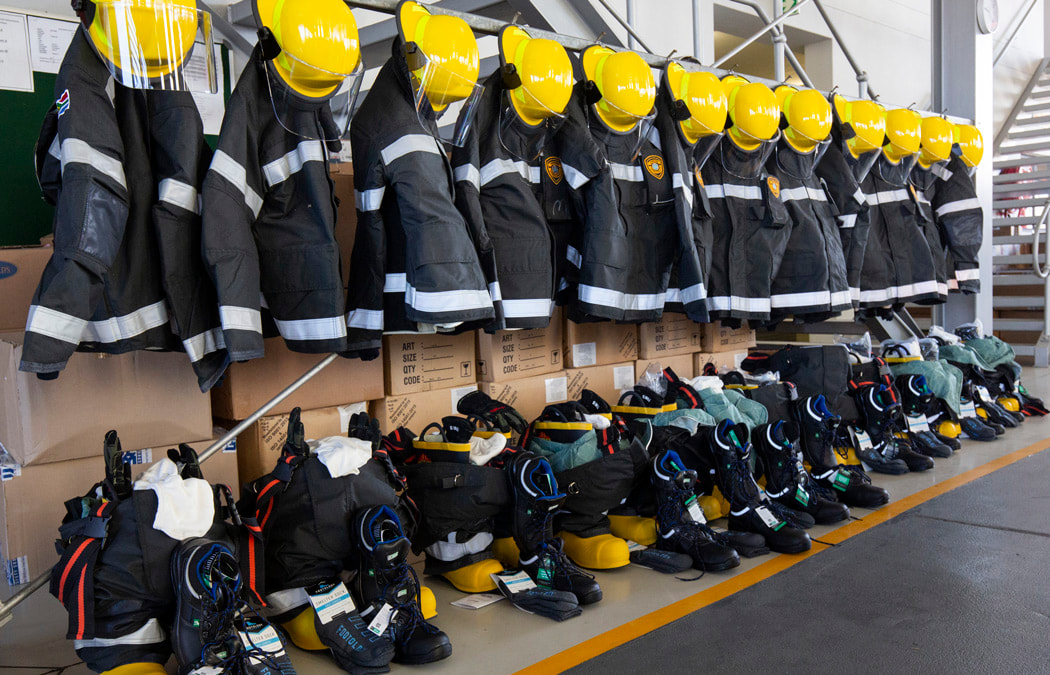
Article from FRI Volume 7 No 3, Cover Profile
Santam initiated the Partnership for Risk and Resilience (P4RR) Programme in 2012 in response to the South African government’s call for the corporate community to support critical skills development and capacity building in municipalities within the framework of the Business Adopt a Municipality (BAAM).
P4RR is Santam’s flagship programme that aims to help build societal resilience through collaboration and partnerships with all spheres of government, state owned entities, research and academic institutions, community-based organisations and private sector agencies.P4RR aims to co-create initiatives to enhance institutional capacity of mandated organisations to manage disaster risks focusing on three primary hazards such as drought, fires and floods.
The P4RR initiatives are largely funded by the Emthunzini Community Trust, corporate social investment (CSI) funds and also obtain resources from other parts of Santam’s business. Climate change is impacting severity, frequency and intensity of hydro-meteorological hazards such as veldfires, drought and floods resulting in unprecedented scale of devastation of communities, livelihoods, infrastructure and insurance losses as witnessed during the 2022 April-May KwaZulu-Natal flood disaster.
The P4RR programme contributes to the achievement of both the Sendai Priorities and Targets including through a. conducting community-based risk assessments, b. supporting resilience building efforts, c. strengthening municipal institutional capacity and d. community education and awareness programmes, etc.
“The P4RR programme has made effective strides towards building resilient communities. It has over the past 10 years evolved into a holistic programme that addresses prevalent disaster risks such as fire, flood and drought. We have partnered with municipalities and other spheres of government and civil society to co-create solutions that are impactful. At Santam, we strive to help communities better manage their disaster risks. As a responsible corporate citizen of South Africa, we are proud of our programme, which fosters sustainable economic development and safer communities”, said Tavaziva Madzinga, Santam Group CEO.
The South African Disaster Management Act, 2002 (Act No 57 of 2002) calls for the active participation of all stakeholders, including the private sector, NGOs, technical experts, communities, traditional leaders and volunteers, in disaster risk management planning and operations. Against this background, Santam has integrated the initiatives implemented through P4RR in its corporate strategy under the strategic theme namely Help Build Resilient Societies and has aligned focus areas of the P4RR programme to the Key Performance Areas (KPAs) of the National Disaster Management Framework to facilitate implementation and align reporting arrangements for partner municipalities.
P4RR is Santam’s flagship programme that aims to help build societal resilience through collaboration and partnerships with all spheres of government, state owned entities, research and academic institutions, community-based organisations and private sector agencies.P4RR aims to co-create initiatives to enhance institutional capacity of mandated organisations to manage disaster risks focusing on three primary hazards such as drought, fires and floods.
The P4RR initiatives are largely funded by the Emthunzini Community Trust, corporate social investment (CSI) funds and also obtain resources from other parts of Santam’s business. Climate change is impacting severity, frequency and intensity of hydro-meteorological hazards such as veldfires, drought and floods resulting in unprecedented scale of devastation of communities, livelihoods, infrastructure and insurance losses as witnessed during the 2022 April-May KwaZulu-Natal flood disaster.
The P4RR programme contributes to the achievement of both the Sendai Priorities and Targets including through a. conducting community-based risk assessments, b. supporting resilience building efforts, c. strengthening municipal institutional capacity and d. community education and awareness programmes, etc.
“The P4RR programme has made effective strides towards building resilient communities. It has over the past 10 years evolved into a holistic programme that addresses prevalent disaster risks such as fire, flood and drought. We have partnered with municipalities and other spheres of government and civil society to co-create solutions that are impactful. At Santam, we strive to help communities better manage their disaster risks. As a responsible corporate citizen of South Africa, we are proud of our programme, which fosters sustainable economic development and safer communities”, said Tavaziva Madzinga, Santam Group CEO.
The South African Disaster Management Act, 2002 (Act No 57 of 2002) calls for the active participation of all stakeholders, including the private sector, NGOs, technical experts, communities, traditional leaders and volunteers, in disaster risk management planning and operations. Against this background, Santam has integrated the initiatives implemented through P4RR in its corporate strategy under the strategic theme namely Help Build Resilient Societies and has aligned focus areas of the P4RR programme to the Key Performance Areas (KPAs) of the National Disaster Management Framework to facilitate implementation and align reporting arrangements for partner municipalities.
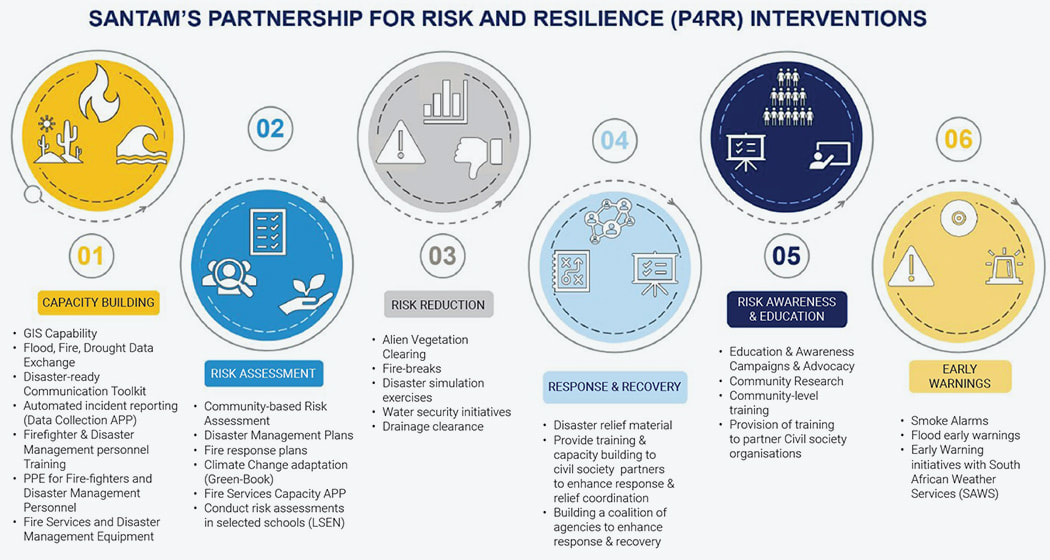
Figure 1 below depicts the range of interventions that Santam implements with its partners based on the priorities of various agencies.
“The Partnership for Risk and Resilience (P4RR) programme has made a significant impact over the past 10 years, helping vulnerable communities become more resilient amid pervasive disasters. Capacitating municipalities through collaboration has ensured the continuity and sustainability of service delivery beyond Santam’s involvement. It exemplifies a strategic social impact programme, in that its outcome has a developmental and business imperative”, said Neptal Khoza, head of market development at Santam.
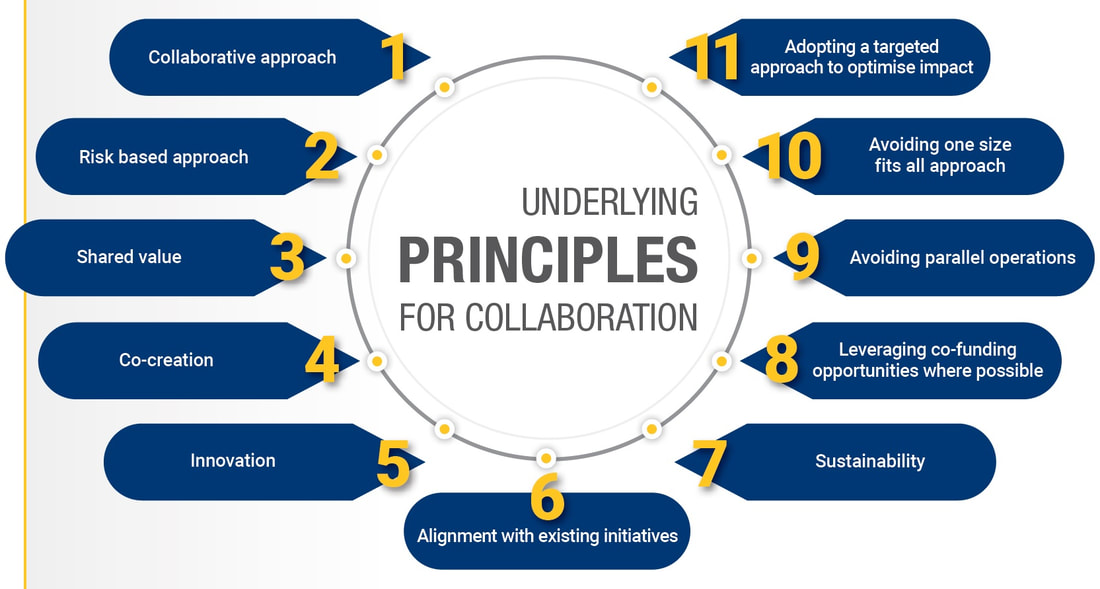
Santam’s work with its partners is underpinned by several fundamental principles. Figure 2 below summarises these values.
Santam’s work with its partners is underpinned by several fundamental principles. Figure 2 below summarises these values.
Key P4RR highlights
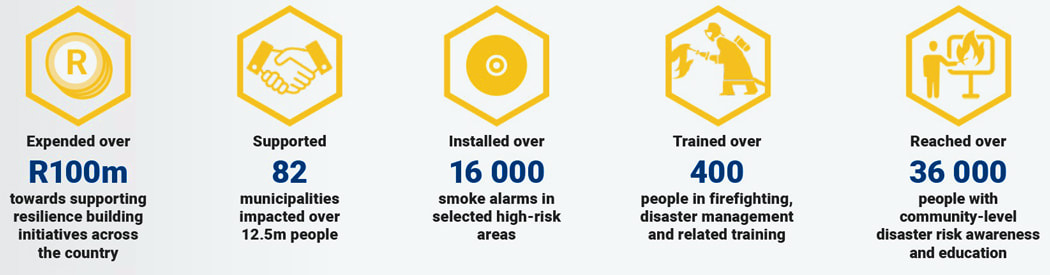
As a leading short-term insurer, Santam continues to lead efforts to reduce risks and build resilience across the country through partnerships. To date, Santam and the Emthunzini Trust have:
As a leading short-term insurer, Santam continues to lead efforts to reduce risks and build resilience across the country through partnerships. To date, Santam and the Emthunzini Trust have:
Climate change adaptation support through the Greenbook
Climate change and variability is impacting South Africa’s disaster risk profile resulting in unprecedented scale of devastation of communities, livelihoods, social infrastructure and insurance losses.
Against this background, Climate Change adaptation (CCA) is an integral component of Santam’s P4RR programme. With this in mind, Santam has partnered with the Council for Scientific and Industrial Research (CSIR), National Disaster Management Centre, Department of Forestry, Fisheries and Environment, Climate and Disaster Resilience Fund (CDRF) to assist selected municipalities to develop CCA plans using the Green Book.
The Green Book is a multi-disciplinary, open-access planning support system that provides evidence to municipalities to adapt their cities and towns to current and future climate change impacts based on their risk assessment. The GreenBook also provides appropriate adaptation measures that can be implemented in cities and towns, so that South African settlements are able to minimise the impact of climate hazards on communities and infrastructure, while also contributing to developmental goals.
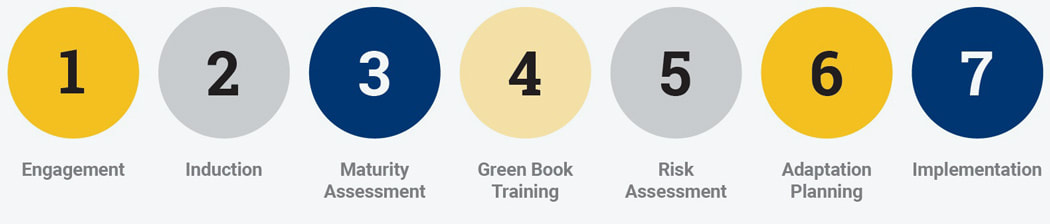
Santam and its partners have completed the development of climate change adaption plans for nine districts and one metro. Figure 3 below shows the process for the development of climate change adaptation plans:
Climate change and variability is impacting South Africa’s disaster risk profile resulting in unprecedented scale of devastation of communities, livelihoods, social infrastructure and insurance losses.
Against this background, Climate Change adaptation (CCA) is an integral component of Santam’s P4RR programme. With this in mind, Santam has partnered with the Council for Scientific and Industrial Research (CSIR), National Disaster Management Centre, Department of Forestry, Fisheries and Environment, Climate and Disaster Resilience Fund (CDRF) to assist selected municipalities to develop CCA plans using the Green Book.
The Green Book is a multi-disciplinary, open-access planning support system that provides evidence to municipalities to adapt their cities and towns to current and future climate change impacts based on their risk assessment. The GreenBook also provides appropriate adaptation measures that can be implemented in cities and towns, so that South African settlements are able to minimise the impact of climate hazards on communities and infrastructure, while also contributing to developmental goals.
Santam and its partners have completed the development of climate change adaption plans for nine districts and one metro. Figure 3 below shows the process for the development of climate change adaptation plans:
As part of supporting climate change adaptation efforts, Santam donated and planted 200 indigenous trees on 3 October 2023 in the Capricorn District; this district is one of the ten municipalities we supported to develop a climate change adaption plan. Vegetation indigenous to South Africa generally requires far less irrigation and forms an important part of the defence of cities against climate change. The 200 indigenous trees have been planted in selected special needs schools and fire stations.
Emerging P4RR outcomes and high-level insights illustrate the positive impact of the programme
A recent independent study revealed that the P4RR programme is making a positive contribution to disaster risk management in South Africa and most significantly, it is doing so in areas of systems failures, plugging important gaps. These contributions include institution strengthening and capacity building, the forging of new relationships and modalities for stakeholder cooperation and prompting innovation in the sector.
Lessons learned
Santam, together with its partners, have learned these important lessons from the implementation of the P4RR programme:
Mohlakoana Jones Mokoena, manager of Emergency Services for the Thabo Mofutsanyana District Municipality, said, “The district municipality was facing a significant challenge in fulfilling its constitutional mandate of providing service delivery for emergency services to the community due to a lack of funding. With the support we received from Santam, we can proudly say that we are in compliance with legislation. We conducted disaster risk assessment, which informs the municipal disaster management plans in accordance with legislative requirements. We were introduced to the Greenbook, which is currently assisting us to comply with the Climate Change Response requirements and we have an Incident Capturing Tool, which assists us with mapping incidents online. We have trained our emergency personnel in various courses such as fire prevention, incident command system and fire investigation, among others. We’ve also acquired equipment that assists us with managing disasters. In our experience, the P4RR programme has proven to be effective and is having a truly positive impact on our community.”
Dr Moses Khangale, manager for Stakeholder Programmes at Santam, said, “An independent study of Santam’s P4RR programme executed in 2022 revealed that over the last decade, Santam has made a positive contribution to disaster risk management and fire services in South Africa. These contributions include strengthening institutional capacity of governmental partners, capacity building, forging of new cross-sectoral partnerships and modalities for stakeholder cooperation as well as prompting innovation in the sector. While the study found out that there is ample evidence that the P4RR programme components are yielding developmental outcomes and making an important contribution to building resilient communities in the country, it also acknowledged that the programme has catalysed significant improvements and engendered collective ownership to proactively reduce risks and build resilience in the face of increasing losses associated with climate change and variability.”
Henry Prins, municipal manager at the Cape Winelands District Municipality, said, “The partnership between the Cape Winelands District Municipality (CWDM) and Santam’s P4RR programme commenced in 2019 and has enabled the creation of a risk-aware Cape Winelands. This partnership has benefitted not only our organisation and local municipalities, but more importantly, it has had a notable impact on the most vulnerable citizens of our district. Through our disaster management division, the partnership afforded our residents the opportunity to develop resilience against disasters with the installation of 4 000 smoke alarms in informal homes over a period of four years. We helped prepare children and their caregivers/educators for disasters by conducting disaster awareness exercises at schools during International Day of Disaster Risk Reduction (IDDR) and over 39 000 children received water safety training. The partnership benefited and continues to benefit citizens through the Disaster Ready Toolkit, the development of which played an incalculable role during the pandemic.”
He added, “Our local municipalities were capacitated through the donation of firefighting equipment ensuring that resources were always on hand, thus reducing the impact of disasters on both the fire services and victims. A multi-sectoral disaster simulation ensured that all disaster response services in the CWDM are prepared for any incident. The mentorship that stemmed from the P4RR programme collaboration has equipped CWDM employees, particularly those involved in risk, communications, fire and disaster related divisions with the skills and knowledge that will continue to benefit our organisation, partners and citizens for years to come.”
Etienne du Toit, deputy director of Fire and Rescue Services, Western Cape Disaster Management Centre, Department of Local Government, said, “Most people will only experience emergency services once-in-a-lifetime. However, the only expectation citizens have, should they find themselves in the unfortunate position of needing emergency services, is that someone with adequate training, experience and equipment will arrive within an acceptable amount of time to alleviate the situation. Santam’s P4RR programme is a testament to how rigorous support from the private sector can strengthen the foundation for effective municipal fire and emergency service delivery. It is a brilliant example of how true partnerships between the private sector, government and municipalities can make a real difference and positively impact the lives of ordinary citizens, ensuring their expectations are met.”
P4RR outcomes and unique value-add
The review outcomes showed that P4RR is making a positive contribution to disaster and risk management in South Africa. Perhaps more significantly, it is doing so in areas of system failures, plugging important gaps. These contributions include institutional strengthening, capacity building and forging new relationships.
The P4RR programme has significantly enhanced disaster management and fire services capacity for its partner municipalities and agencies over the past 10 years.
While the P4RR programme continues to partner with new municipalities, its focus is evolving to explore measures to deepen the impact and sustainability of its interventions (depth as opposed to breadth).
Santam celebrated these achievements in two events, one being held in Johannesburg and the other in Cape Town. The events were well attended with the various municipalities providing feedback as well as panel discussions with the stakeholders.
Emerging P4RR outcomes and high-level insights illustrate the positive impact of the programme
A recent independent study revealed that the P4RR programme is making a positive contribution to disaster risk management in South Africa and most significantly, it is doing so in areas of systems failures, plugging important gaps. These contributions include institution strengthening and capacity building, the forging of new relationships and modalities for stakeholder cooperation and prompting innovation in the sector.
Lessons learned
Santam, together with its partners, have learned these important lessons from the implementation of the P4RR programme:
- Importance of linking initiatives to mandated organisations
- Alignment of programmes to existing initiatives and programme
- Adopting a targeted approach to optimise impact
- Collaborative approaches integral to public- private partnerships
- Importance of co-funding of initiatives in sustainability of initiatives
- Partnering/collaborating a district and metro level.
Mohlakoana Jones Mokoena, manager of Emergency Services for the Thabo Mofutsanyana District Municipality, said, “The district municipality was facing a significant challenge in fulfilling its constitutional mandate of providing service delivery for emergency services to the community due to a lack of funding. With the support we received from Santam, we can proudly say that we are in compliance with legislation. We conducted disaster risk assessment, which informs the municipal disaster management plans in accordance with legislative requirements. We were introduced to the Greenbook, which is currently assisting us to comply with the Climate Change Response requirements and we have an Incident Capturing Tool, which assists us with mapping incidents online. We have trained our emergency personnel in various courses such as fire prevention, incident command system and fire investigation, among others. We’ve also acquired equipment that assists us with managing disasters. In our experience, the P4RR programme has proven to be effective and is having a truly positive impact on our community.”
Dr Moses Khangale, manager for Stakeholder Programmes at Santam, said, “An independent study of Santam’s P4RR programme executed in 2022 revealed that over the last decade, Santam has made a positive contribution to disaster risk management and fire services in South Africa. These contributions include strengthening institutional capacity of governmental partners, capacity building, forging of new cross-sectoral partnerships and modalities for stakeholder cooperation as well as prompting innovation in the sector. While the study found out that there is ample evidence that the P4RR programme components are yielding developmental outcomes and making an important contribution to building resilient communities in the country, it also acknowledged that the programme has catalysed significant improvements and engendered collective ownership to proactively reduce risks and build resilience in the face of increasing losses associated with climate change and variability.”
Henry Prins, municipal manager at the Cape Winelands District Municipality, said, “The partnership between the Cape Winelands District Municipality (CWDM) and Santam’s P4RR programme commenced in 2019 and has enabled the creation of a risk-aware Cape Winelands. This partnership has benefitted not only our organisation and local municipalities, but more importantly, it has had a notable impact on the most vulnerable citizens of our district. Through our disaster management division, the partnership afforded our residents the opportunity to develop resilience against disasters with the installation of 4 000 smoke alarms in informal homes over a period of four years. We helped prepare children and their caregivers/educators for disasters by conducting disaster awareness exercises at schools during International Day of Disaster Risk Reduction (IDDR) and over 39 000 children received water safety training. The partnership benefited and continues to benefit citizens through the Disaster Ready Toolkit, the development of which played an incalculable role during the pandemic.”
He added, “Our local municipalities were capacitated through the donation of firefighting equipment ensuring that resources were always on hand, thus reducing the impact of disasters on both the fire services and victims. A multi-sectoral disaster simulation ensured that all disaster response services in the CWDM are prepared for any incident. The mentorship that stemmed from the P4RR programme collaboration has equipped CWDM employees, particularly those involved in risk, communications, fire and disaster related divisions with the skills and knowledge that will continue to benefit our organisation, partners and citizens for years to come.”
Etienne du Toit, deputy director of Fire and Rescue Services, Western Cape Disaster Management Centre, Department of Local Government, said, “Most people will only experience emergency services once-in-a-lifetime. However, the only expectation citizens have, should they find themselves in the unfortunate position of needing emergency services, is that someone with adequate training, experience and equipment will arrive within an acceptable amount of time to alleviate the situation. Santam’s P4RR programme is a testament to how rigorous support from the private sector can strengthen the foundation for effective municipal fire and emergency service delivery. It is a brilliant example of how true partnerships between the private sector, government and municipalities can make a real difference and positively impact the lives of ordinary citizens, ensuring their expectations are met.”
P4RR outcomes and unique value-add
The review outcomes showed that P4RR is making a positive contribution to disaster and risk management in South Africa. Perhaps more significantly, it is doing so in areas of system failures, plugging important gaps. These contributions include institutional strengthening, capacity building and forging new relationships.
The P4RR programme has significantly enhanced disaster management and fire services capacity for its partner municipalities and agencies over the past 10 years.
While the P4RR programme continues to partner with new municipalities, its focus is evolving to explore measures to deepen the impact and sustainability of its interventions (depth as opposed to breadth).
Santam celebrated these achievements in two events, one being held in Johannesburg and the other in Cape Town. The events were well attended with the various municipalities providing feedback as well as panel discussions with the stakeholders.
Santam is an authorised financial services provider (FSP 3416), a licensed non-life insurer and controlling company for its group companies.