
|
|

|

|
|
25 August 2023
|
Featured FRI Magazine article: Five basic rules for interior structural fire fighting by Colin Deiner (FRI Vol 1 No 4)
|
|
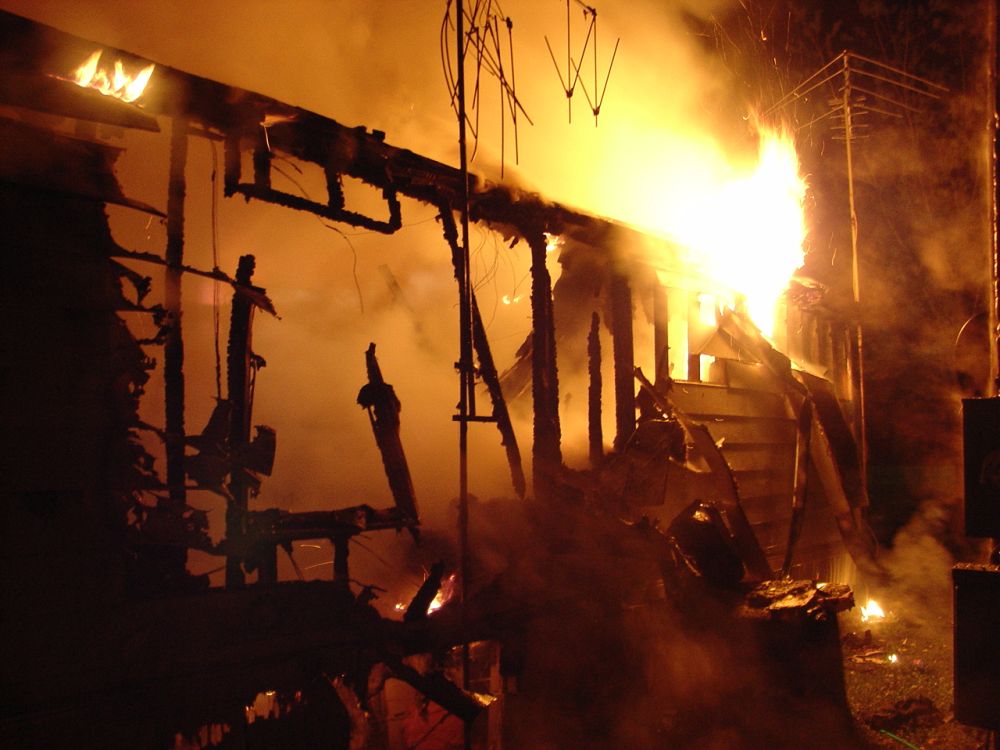
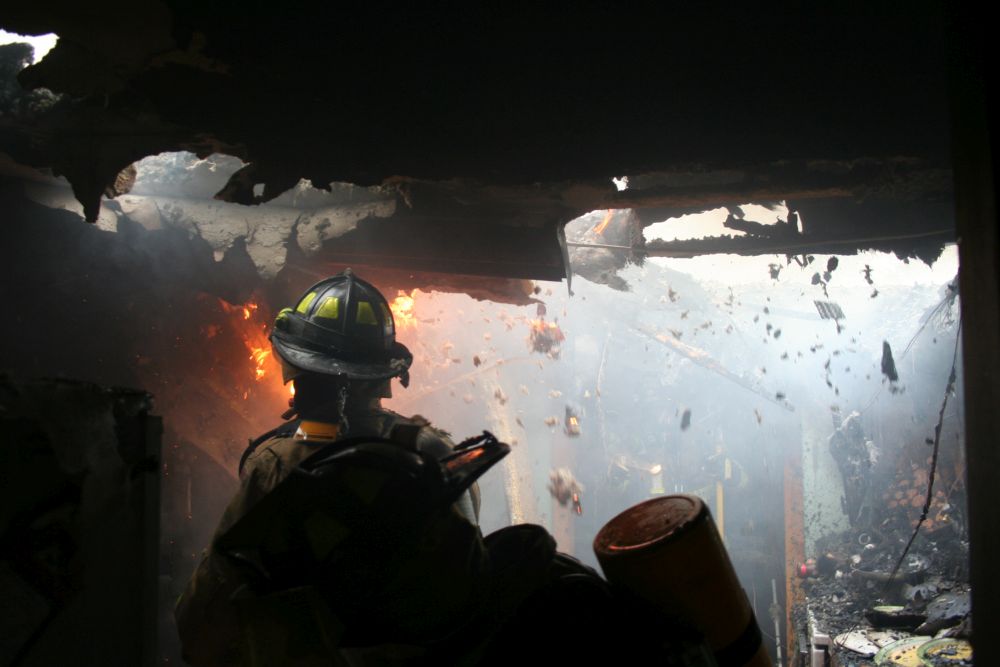
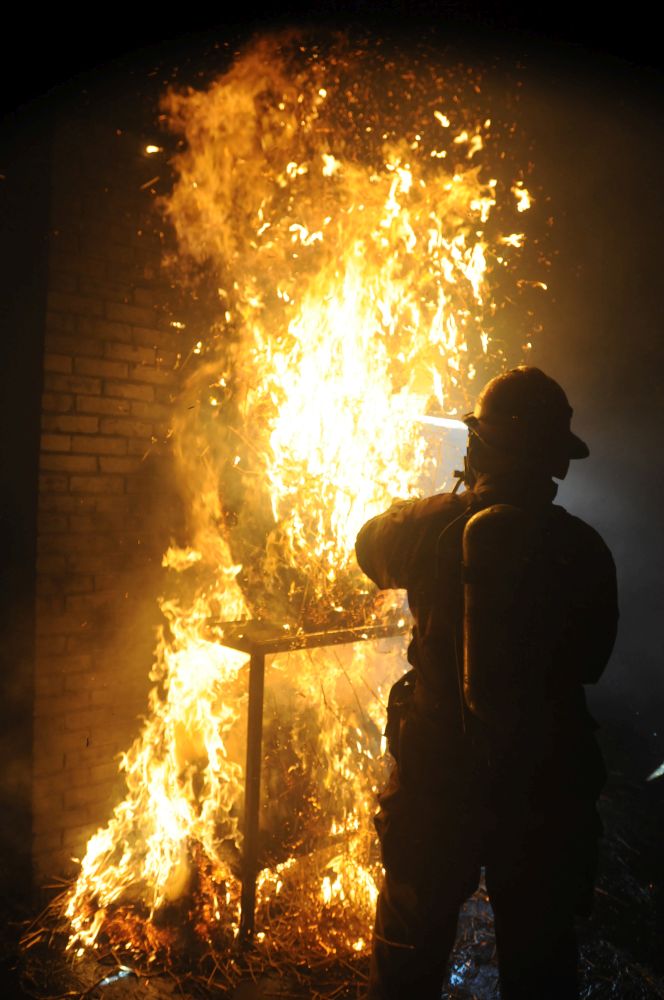
This week’s featured Fire and Rescue International magazine article is: Five basic rules for interior structural fire fighting written by Colin Deiner, chief director, Disaster Management and Fire Brigade Services, Western Cape Government (FRI Vol 1 No 4). This was the first article Colin wrote for us. We will be sharing more technical articles from Fire and Rescue International magazine on a weekly basis with our readers to assist in technology transfer. This will hopefully create an increased awareness, providing you with hands-on advice and guidance. All our magazines are available free of charge in PDF format on our website and online at ISSUU. We also provide all technical articles as a free download in our article archive on our website.
Five basic rules for interior structural fire fighting
By Colin Deiner, chief director, Disaster Management and Fire Brigade Services, Western Cape Government
One of my favourite sayings in the fire fighting business comes from the famous retired fire chief of the Phoenix, Arizona Fire Department, Alan Brunacini: be careful of people who say, “We fight fires differently out here”, because they usually do!”
The point is that the art of structural fire fighting has changed very little over the years. Some of the science has most definitely changed but essentially it is still all about finding the most effective way to put the wet stuff on the red stuff. I recently found an interesting PowerPoint presentation on the internet which was entitled “10 Rules for Fighting Fires”. This got me thinking about the way we fight fires “out here” and how our rules would look. Here then follows my own rules for fighting structural fires in South African conditions (I have kept it down to five to make it easy to remember).
You may agree with me, you may not. Either way, it will be interesting to hear your input on this subject.
1. Bring everything you need and bring it early
Due to budget constraints and a number of other more archaic factors many South African fire services still persist in responding a single fire fighting unit to a structural fire call and then calling back-up when they arrive at the scene and realise the fire is too big and complex to manage with just that single unit or when they start getting their collective butts kicked by a fire which has got out of hand due to no effective early control.
Why you shouldn’t do this:
The American “truck and engine company” system is often misunderstood as a convoluted system requiring large numbers of fire fighters and vehicles making it prohibitively expensive. It may be worthwhile to take another look. The system is merely a way of organising your resources into the specific tactical priorities you will activate during a structural fire. Simply put, the engine company carries all your water application kit while the truck company looks after your forcible entry, laddering, search and rescue and ventilation needs. Your engine is generally a medium pumper while your truck would be an aerial device of some description (either a hydraulic platform or turntable ladder). Now before I hear the howls of protest telling me how expensive it is to run an aerial device on every structural fire, I do want to mention that approximately fifteen years back the city of Phoenix, Arizona, Fire Department grappled with the same issue and addressed it by designing what they called a “ladder tender”. This was merely a medium size truck with nothing else but a capacity to carry all the equipment needed to support a sustained structural fire attack. Sure they don’t have aerial capacity on these vehicles but that can be called in when needed. The running costs were brought down dramatically.
The ideal response to a structural fire? Two engines and a truck company. Total staff: 10 people. Not that impossible but highly effective. You wouldn’t play a rugby match against fifteen players if you were only ten but yet we respond to fires badly understaffed and believe we will win here as well.
2. Size up and decide your strategy
A really bad decision made by some fire services over the last number of years has been to remove junior line officers from shift work and move them to office hours positions which generally only requires them to respond to incidents on the request of the junior first responder or to respond from their homes (sometimes in their private, subsidised vehicles). This practice, which is aimed at saving money, has not only severely compromised the safety and effectiveness of the service but has bombed the science of fire fighting back to the stone ages and should seriously be relooked at. I would love to know if any municipality who has implemented this system has actually done a cost-benefit analysis and, if so, what the results have been.
The reason I mention this here is because of the importance of a good early size up of the prevailing conditions at the incident and the need to make the correct early decision as to the best strategy to deal with it. I make no claim to coining the following phrase but we all know that the first ten minutes of a fire call are the most important and will dictate the direction for the next few hours.
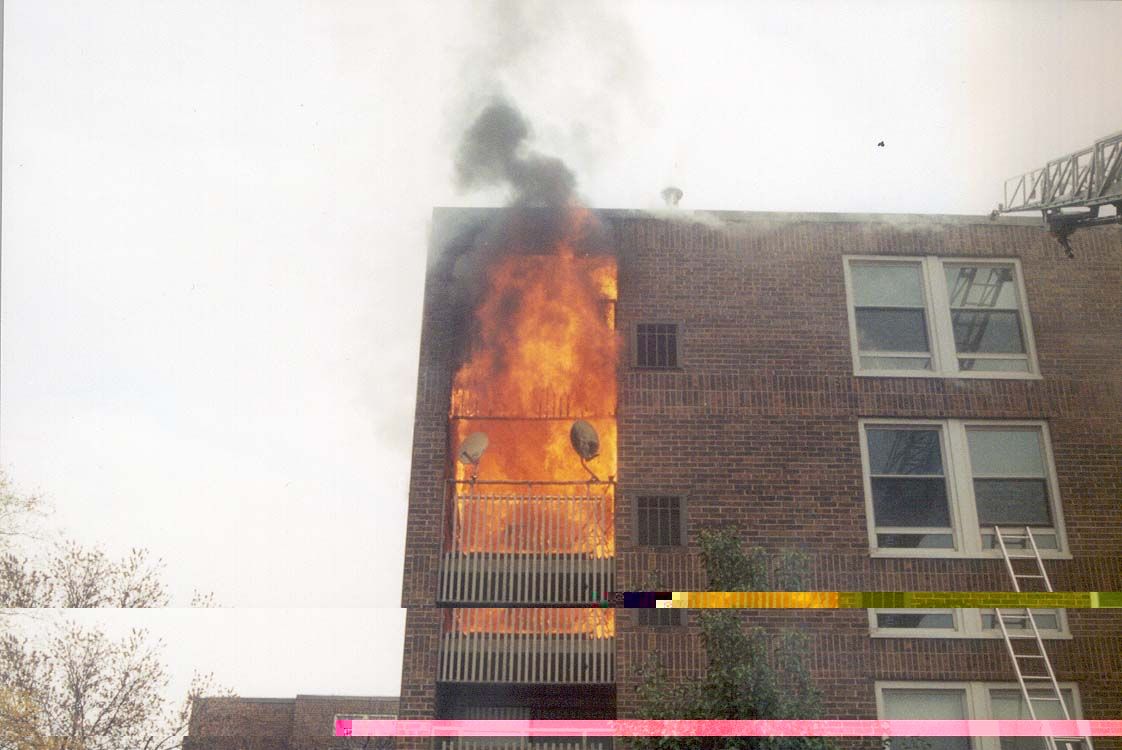
When the first officer arrives on the scene of a structural fire, he/she must try to get as much information as possible and use that to formulate the plan. Remember that a building has six sides (including the top and bottom) and the effect of the fire on each of these sides must be considered.
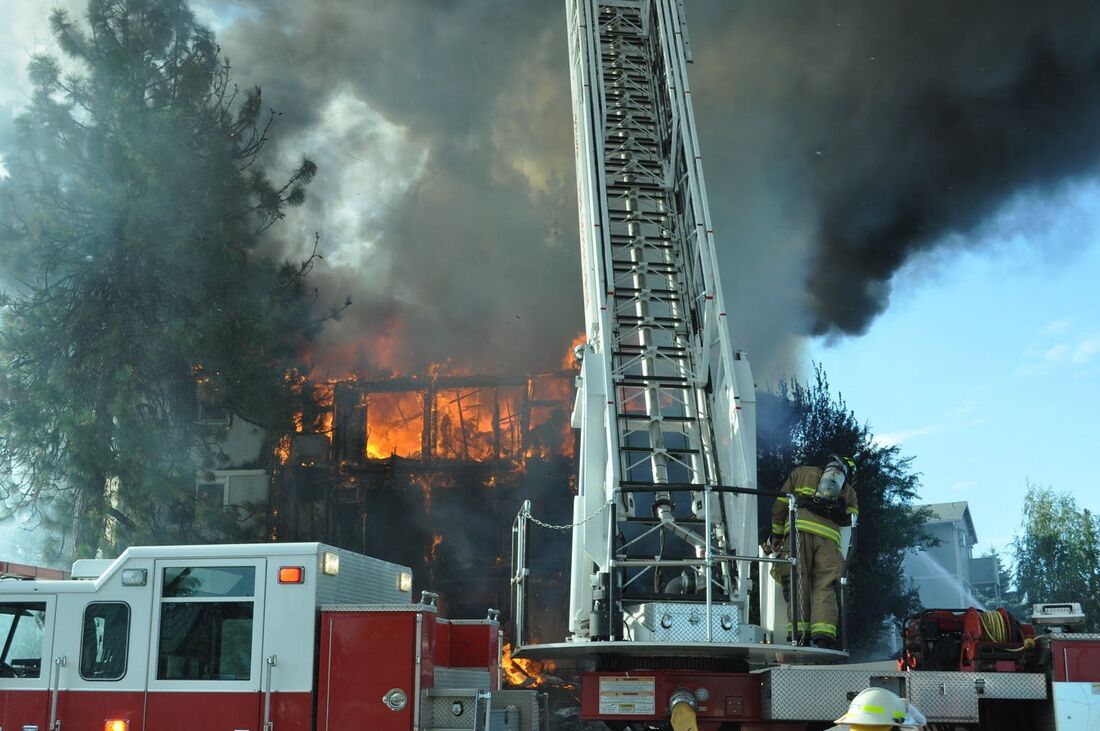
Ideally the officer in command of the first-in engine company should do a drive past of the involved structure and get a three-sided view of prevailing conditions before placing the engine to the furthest front corner of the building but leaving the front of the building to the truck company, thereby enabling them to access any entrance they need to and perform whatever ventilation activities they need to.
The second arriving engine should have the sole purpose of supplying water to the first engine and, if needed, stretch any further hose lines that may be needed. The basic rule should be to always be prepared to deploy three lines: frontal attack, rear attack and roof attack.
Before I get too carried away with the many tactics that could be deployed we need to go back to the most important decision that must be made after the size up……
Offensive or defensive? That is the question!
The condition of the structure, fire column, possibility of rescue and life risk will all play a central role in determining the answer to this question. The golden rule will always be that the risk should match the benefit. If we can save a life we take the chance of committing fire fighters into a structure however if there is no chance of saving any lives and the risk is too great we don’t commit our valuable resources.
Fire service training manuals have in recent years, strongly advocated aggressive interior fire fighting as the most effective way of saving life and property and much of the equipment available nowadays is specifically developed for this purpose. The decision to go offensive and to commit all your resources to an aggressive interior attack must be communicated to all sectors and no person must be in any doubt as to the objectives that need to be reached.
It might occasionally be necessary to switch from offensive to defensive mode. This could happen due to an increase in fire volume or a change in the integrity of the structure. When this happens it’s once again critical to communicate this to all sectors within the command structure. In the organised chaos that accompanies a large structural fire, the biggest mistake a commander can make is to combine an offensive and defensive strategy. This “mode confusion” can lead to an extremely dangerous situation, particularly for the crews on the inside and can severely compromise ventilation and possible escape routes. Remember, mode confusion is the first sign that you are losing your head.
3. Do it in 3D
In most services fire fighters are trained to break down doors and attack flames with water pumped through large diameter hoses. Fire fighters are taught to never spray water into smoke as it forms steam and comes back at them, causing burns. This was fine a number of years ago. Building materials have since changed dramatically and are now made from synthetic materials rather than wood or metal. This means that today’s fires produce two to three times as much energy as a typical fire did in 1980 and most of that energy is released as flammable gasses. These invisible gasses can be much more dangerous than the flames, especially in enclosed spaces. The types of insulation used in some newer buildings cause gasses to become superheated, flammable and highly mobile in a fire situation. The result is extreme fire behaviour, marked by life-threatening backdrafts, flashovers and gas explosions.
3D fire fighting is a relatively new term in fire fighting although many services in Sweden and the United Kingdom have been using the strategies and tactics related to it for a number of years. Simply put, 3D fire fighting refers to the techniques and tactics used to gain control over deteriorating fire conditions inside fire-involved structures. This objective of taking control of interior conditions at the outset of fire operations is based upon an immediate risk-based approach, evaluating risk versus gain and is applied at the earliest opportunity, ie on fire arrival at the fire scene.
3D fire fighting entails hose teams entering a structure and using small bursts of fog to cool the gasses and create a thermal balance inside the structure. By deploying the water in very short bursts it is broken into tiny droplets and instead of turning into steam the moisture's expanded surface area will cool the gasses in the smoke. Then fire fighters can move closer to the blaze, instead of ducking for cover and once they are close enough, revert to the old method of smothering the blaze with a solid application of water.
The main advantage of 3D fire fighting is fire fighter safety. Which is achieved by cooling the smoke, thus the smoke is less likely to start a fire when it moves away; dropping the pressure of the gas drops when it cools (thereby also reducing the mobility of the smoke and avoiding a "backfire" of water vapour). Finally it prevents roll-over (flames rolling off the ceiling which gets created by the burning of hot gasses).
4. Ventilate
Once the decision is made to commit hose crews to an aggressive interior attack those crews need to be supported. The three main areas of support are forcible entry, ventilation and laddering. And it is here, boys and girls, where truck companies come in.
A former colleague of mine once made the statement “a good fire department is one which can move smoke as effectively as water”. Unfortunately many incident commanders still see ventilation as an activity to be performed sometime during the fire fighting operation, usually when smoke becomes a problem. Ventilation should be a first attack option during an aggressive interior attack and must be implemented together with the initial hose deployment.
The two things you are trying to achieve here are:
Without going into a lesson on ventilation at this point I think the most important thing would be for an incident commander to designate a “ventilation” officer who should make the call as to the method to use and the direction in which the smoke should be moved. With very few exceptions, positive pressure ventilation will be the tool of choice during a rapidly moving interior attack. It is for this reason that the officer commanding the interior attack must have a very close communications net with the hose teams and the ventilation crew and that both groups must know exactly what the other group’s intentions are.
Deciding which direction to move your smoke will also dictate where you will be placing ventilation crews. Putting them on a roof of a structure carries with it a certain amount of risk which can be planned for by ensuring that fire fighters with the right experience and the correct equipment are deployed in these positions. The amount of research done on ventilation saws and Class A foam for protection of unburned areas, to mention a few, provides a platform for us to really make a big effort to improve our ventilation practices and give them a priority position in our standard operating procedures.
When not to ventilate
When commencing an aggressive interior attack the officer’s mind-set must be tempered in certain conditions and he/she must be able to recognise conditions when ventilation could be a safety risk. Ventilation should not be attempted when:
Ventilation gives you the benefit of maximum fire fighter protection and minimising property loss. It’s about at the time that the living room sofa is floating out of the front door and your fire fighters are walking into walls on their way out of the building that you will realise that you have to relook your ventilation practices.
Controlling the movement of smoke may serve as a life-saving tactic on its own.
5. Support your attack
In rule four we already mentioned ventilation as a support tool for interior fire fighting. Another major support tool (especially in South Africa) is forcible entry.
Forcible entry should not be seen as a function that creates access for rescue and hose teams in the first stages of a fire and then ceases to exist. In South Africa our unfortunately high crime rate places a huge reliance on intruder proof (burglar) bars and security doors. Generally teams move into a structure through a normal opening and then proceed into rooms that are heavily burglar proofed and allow virtually no egress. A good practice would be to have a forcible entry team move in tandem with the interior team on the outside the structure and be prepared to remove any obstructions should it be needed to remove a rescued victim or as an escape route for the hose teams. Communications here are again vital and in the event of a fire in an above ground floor structure your requirement for extra laddering must be factored into your total support considerations. Removing security bars as you go along will not only be time consuming but also very costly and will definitely not endear the fire department to the building owner in the long run.
The last support tool I would like to discuss is laddering. Another highly negative spin off from a single vehicle response is the limited number of ladders that can be carried by that vehicle to a structural fire. There is a reason NFPA specifies twelve ladders on a truck company. Committing rescue and hose crews into the most advantageous areas of a structural fire requires that those crews must be provided with an egress route at all times. The correct placement of sufficient ladders will save the lives of your roof crews.
In closing
A well-known hazmat instructor from the USA, Mike Callan, once said: “hazardous materials don’t respect colour, sex or religion. It respects smart”. You can relate this phrase to fire fighting just as easily. A fire will provide different challenges to people on different levels. An incident commander needs to size up the situation, get the big picture and ensure correct placement of his/her units and deployment of resources into the best positions. The ventilation officer needs to read the smoke behaviour decide what would be the best procedure and safely deploy roof teams. A hose team leader needs to enter a building safely, balance the thermal layers in the structure, consider hydro ventilating and attack the fire with minimum water damage.
It will only be through solid and job focused training that fire fighters will gain the kind of skills needed to perform an effective aggressive interior attack. This must be firmly ensconced in the character of a fire department. Staff must train regularly and it must be implemented whenever it is required.
Only if this approach becomes a culture within your fire service will it show its real benefit: safer fire fighting, less smoke and water damage and maximum effect.
Five basic rules for interior structural fire fighting
By Colin Deiner, chief director, Disaster Management and Fire Brigade Services, Western Cape Government
One of my favourite sayings in the fire fighting business comes from the famous retired fire chief of the Phoenix, Arizona Fire Department, Alan Brunacini: be careful of people who say, “We fight fires differently out here”, because they usually do!”
The point is that the art of structural fire fighting has changed very little over the years. Some of the science has most definitely changed but essentially it is still all about finding the most effective way to put the wet stuff on the red stuff. I recently found an interesting PowerPoint presentation on the internet which was entitled “10 Rules for Fighting Fires”. This got me thinking about the way we fight fires “out here” and how our rules would look. Here then follows my own rules for fighting structural fires in South African conditions (I have kept it down to five to make it easy to remember).
You may agree with me, you may not. Either way, it will be interesting to hear your input on this subject.
1. Bring everything you need and bring it early
Due to budget constraints and a number of other more archaic factors many South African fire services still persist in responding a single fire fighting unit to a structural fire call and then calling back-up when they arrive at the scene and realise the fire is too big and complex to manage with just that single unit or when they start getting their collective butts kicked by a fire which has got out of hand due to no effective early control.
Why you shouldn’t do this:
- Doing this leads to the practice of placing every conceivable piece of equipment you think you may need on the vehicle and in so doing cluttering the storage space up so badly that even the most experienced fire fighter has a hard time finding the specific piece of kit he may need for a particular job
- You only have one pump on scene and that cuts down your options should things start going pear shaped with your water supply
- Your fire truck is designed to carry a specific load. Packing “everything anywhere” does not help when you have a long lag on your vehicle replacement policy like most fire departments do
The American “truck and engine company” system is often misunderstood as a convoluted system requiring large numbers of fire fighters and vehicles making it prohibitively expensive. It may be worthwhile to take another look. The system is merely a way of organising your resources into the specific tactical priorities you will activate during a structural fire. Simply put, the engine company carries all your water application kit while the truck company looks after your forcible entry, laddering, search and rescue and ventilation needs. Your engine is generally a medium pumper while your truck would be an aerial device of some description (either a hydraulic platform or turntable ladder). Now before I hear the howls of protest telling me how expensive it is to run an aerial device on every structural fire, I do want to mention that approximately fifteen years back the city of Phoenix, Arizona, Fire Department grappled with the same issue and addressed it by designing what they called a “ladder tender”. This was merely a medium size truck with nothing else but a capacity to carry all the equipment needed to support a sustained structural fire attack. Sure they don’t have aerial capacity on these vehicles but that can be called in when needed. The running costs were brought down dramatically.
The ideal response to a structural fire? Two engines and a truck company. Total staff: 10 people. Not that impossible but highly effective. You wouldn’t play a rugby match against fifteen players if you were only ten but yet we respond to fires badly understaffed and believe we will win here as well.
2. Size up and decide your strategy
A really bad decision made by some fire services over the last number of years has been to remove junior line officers from shift work and move them to office hours positions which generally only requires them to respond to incidents on the request of the junior first responder or to respond from their homes (sometimes in their private, subsidised vehicles). This practice, which is aimed at saving money, has not only severely compromised the safety and effectiveness of the service but has bombed the science of fire fighting back to the stone ages and should seriously be relooked at. I would love to know if any municipality who has implemented this system has actually done a cost-benefit analysis and, if so, what the results have been.
The reason I mention this here is because of the importance of a good early size up of the prevailing conditions at the incident and the need to make the correct early decision as to the best strategy to deal with it. I make no claim to coining the following phrase but we all know that the first ten minutes of a fire call are the most important and will dictate the direction for the next few hours.
When the first officer arrives on the scene of a structural fire, he/she must try to get as much information as possible and use that to formulate the plan. Remember that a building has six sides (including the top and bottom) and the effect of the fire on each of these sides must be considered.
Ideally the officer in command of the first-in engine company should do a drive past of the involved structure and get a three-sided view of prevailing conditions before placing the engine to the furthest front corner of the building but leaving the front of the building to the truck company, thereby enabling them to access any entrance they need to and perform whatever ventilation activities they need to.
The second arriving engine should have the sole purpose of supplying water to the first engine and, if needed, stretch any further hose lines that may be needed. The basic rule should be to always be prepared to deploy three lines: frontal attack, rear attack and roof attack.
Before I get too carried away with the many tactics that could be deployed we need to go back to the most important decision that must be made after the size up……
Offensive or defensive? That is the question!
The condition of the structure, fire column, possibility of rescue and life risk will all play a central role in determining the answer to this question. The golden rule will always be that the risk should match the benefit. If we can save a life we take the chance of committing fire fighters into a structure however if there is no chance of saving any lives and the risk is too great we don’t commit our valuable resources.
Fire service training manuals have in recent years, strongly advocated aggressive interior fire fighting as the most effective way of saving life and property and much of the equipment available nowadays is specifically developed for this purpose. The decision to go offensive and to commit all your resources to an aggressive interior attack must be communicated to all sectors and no person must be in any doubt as to the objectives that need to be reached.
It might occasionally be necessary to switch from offensive to defensive mode. This could happen due to an increase in fire volume or a change in the integrity of the structure. When this happens it’s once again critical to communicate this to all sectors within the command structure. In the organised chaos that accompanies a large structural fire, the biggest mistake a commander can make is to combine an offensive and defensive strategy. This “mode confusion” can lead to an extremely dangerous situation, particularly for the crews on the inside and can severely compromise ventilation and possible escape routes. Remember, mode confusion is the first sign that you are losing your head.
3. Do it in 3D
In most services fire fighters are trained to break down doors and attack flames with water pumped through large diameter hoses. Fire fighters are taught to never spray water into smoke as it forms steam and comes back at them, causing burns. This was fine a number of years ago. Building materials have since changed dramatically and are now made from synthetic materials rather than wood or metal. This means that today’s fires produce two to three times as much energy as a typical fire did in 1980 and most of that energy is released as flammable gasses. These invisible gasses can be much more dangerous than the flames, especially in enclosed spaces. The types of insulation used in some newer buildings cause gasses to become superheated, flammable and highly mobile in a fire situation. The result is extreme fire behaviour, marked by life-threatening backdrafts, flashovers and gas explosions.
3D fire fighting is a relatively new term in fire fighting although many services in Sweden and the United Kingdom have been using the strategies and tactics related to it for a number of years. Simply put, 3D fire fighting refers to the techniques and tactics used to gain control over deteriorating fire conditions inside fire-involved structures. This objective of taking control of interior conditions at the outset of fire operations is based upon an immediate risk-based approach, evaluating risk versus gain and is applied at the earliest opportunity, ie on fire arrival at the fire scene.
3D fire fighting entails hose teams entering a structure and using small bursts of fog to cool the gasses and create a thermal balance inside the structure. By deploying the water in very short bursts it is broken into tiny droplets and instead of turning into steam the moisture's expanded surface area will cool the gasses in the smoke. Then fire fighters can move closer to the blaze, instead of ducking for cover and once they are close enough, revert to the old method of smothering the blaze with a solid application of water.
The main advantage of 3D fire fighting is fire fighter safety. Which is achieved by cooling the smoke, thus the smoke is less likely to start a fire when it moves away; dropping the pressure of the gas drops when it cools (thereby also reducing the mobility of the smoke and avoiding a "backfire" of water vapour). Finally it prevents roll-over (flames rolling off the ceiling which gets created by the burning of hot gasses).
4. Ventilate
Once the decision is made to commit hose crews to an aggressive interior attack those crews need to be supported. The three main areas of support are forcible entry, ventilation and laddering. And it is here, boys and girls, where truck companies come in.
A former colleague of mine once made the statement “a good fire department is one which can move smoke as effectively as water”. Unfortunately many incident commanders still see ventilation as an activity to be performed sometime during the fire fighting operation, usually when smoke becomes a problem. Ventilation should be a first attack option during an aggressive interior attack and must be implemented together with the initial hose deployment.
The two things you are trying to achieve here are:
- Improve sight and working conditions for interior hose teams, and
- Improve the survivability chances of any possible trapped victims.
Without going into a lesson on ventilation at this point I think the most important thing would be for an incident commander to designate a “ventilation” officer who should make the call as to the method to use and the direction in which the smoke should be moved. With very few exceptions, positive pressure ventilation will be the tool of choice during a rapidly moving interior attack. It is for this reason that the officer commanding the interior attack must have a very close communications net with the hose teams and the ventilation crew and that both groups must know exactly what the other group’s intentions are.
Deciding which direction to move your smoke will also dictate where you will be placing ventilation crews. Putting them on a roof of a structure carries with it a certain amount of risk which can be planned for by ensuring that fire fighters with the right experience and the correct equipment are deployed in these positions. The amount of research done on ventilation saws and Class A foam for protection of unburned areas, to mention a few, provides a platform for us to really make a big effort to improve our ventilation practices and give them a priority position in our standard operating procedures.
When not to ventilate
When commencing an aggressive interior attack the officer’s mind-set must be tempered in certain conditions and he/she must be able to recognise conditions when ventilation could be a safety risk. Ventilation should not be attempted when:
- A fire is demonstrating 'backdraft' conditions
- A charged primary hose-line is not in position to attack the fire
- Ventilation openings may spread the fire into roof spaces
- A ventilation-controlled fire might advance towards flashover and;
- The flow-rate at the nozzle is unlikely to deal with such escalation
- A clear objective or reason to create an opening has yet to be identified
Ventilation gives you the benefit of maximum fire fighter protection and minimising property loss. It’s about at the time that the living room sofa is floating out of the front door and your fire fighters are walking into walls on their way out of the building that you will realise that you have to relook your ventilation practices.
Controlling the movement of smoke may serve as a life-saving tactic on its own.
5. Support your attack
In rule four we already mentioned ventilation as a support tool for interior fire fighting. Another major support tool (especially in South Africa) is forcible entry.
Forcible entry should not be seen as a function that creates access for rescue and hose teams in the first stages of a fire and then ceases to exist. In South Africa our unfortunately high crime rate places a huge reliance on intruder proof (burglar) bars and security doors. Generally teams move into a structure through a normal opening and then proceed into rooms that are heavily burglar proofed and allow virtually no egress. A good practice would be to have a forcible entry team move in tandem with the interior team on the outside the structure and be prepared to remove any obstructions should it be needed to remove a rescued victim or as an escape route for the hose teams. Communications here are again vital and in the event of a fire in an above ground floor structure your requirement for extra laddering must be factored into your total support considerations. Removing security bars as you go along will not only be time consuming but also very costly and will definitely not endear the fire department to the building owner in the long run.
The last support tool I would like to discuss is laddering. Another highly negative spin off from a single vehicle response is the limited number of ladders that can be carried by that vehicle to a structural fire. There is a reason NFPA specifies twelve ladders on a truck company. Committing rescue and hose crews into the most advantageous areas of a structural fire requires that those crews must be provided with an egress route at all times. The correct placement of sufficient ladders will save the lives of your roof crews.
In closing
A well-known hazmat instructor from the USA, Mike Callan, once said: “hazardous materials don’t respect colour, sex or religion. It respects smart”. You can relate this phrase to fire fighting just as easily. A fire will provide different challenges to people on different levels. An incident commander needs to size up the situation, get the big picture and ensure correct placement of his/her units and deployment of resources into the best positions. The ventilation officer needs to read the smoke behaviour decide what would be the best procedure and safely deploy roof teams. A hose team leader needs to enter a building safely, balance the thermal layers in the structure, consider hydro ventilating and attack the fire with minimum water damage.
It will only be through solid and job focused training that fire fighters will gain the kind of skills needed to perform an effective aggressive interior attack. This must be firmly ensconced in the character of a fire department. Staff must train regularly and it must be implemented whenever it is required.
Only if this approach becomes a culture within your fire service will it show its real benefit: safer fire fighting, less smoke and water damage and maximum effect.